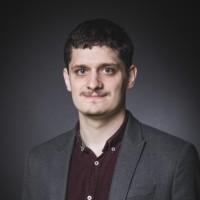
Markus Reiter-Haas
University Assistant
@Graz University of Technology
Dr.techn. Markus Reiter-Haas is a postdoctoral researcher at the Institute of Human-Centred Computing at Graz University of Technology, where he is a member of the AI for Society Lab and the Bilateral AI Cluster of Excellence.
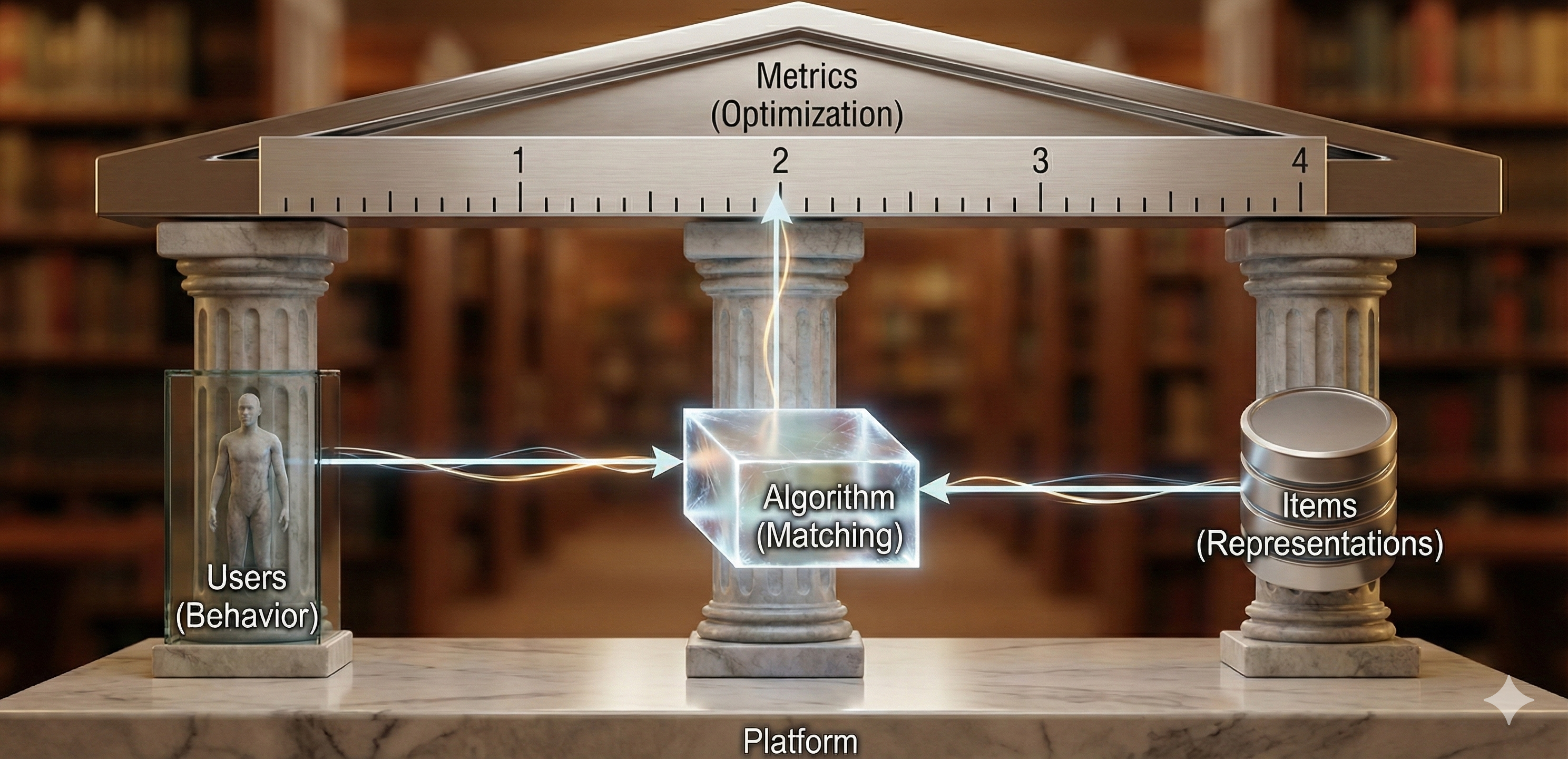
His research focuses on optimizing the three core pillars of modern socio-technical platforms: (1) reliable user behavior analysis and interventions, (2) effective item and document representations, and (3) ethical matching algorithms for information retrieval and recommendation systems. Currently, he is investigating how neuro-symbolic approaches can lead to trustworthy diversification of content in information systems.
This work is supported by an interdisciplinary background that includes a postdoctoral fellowship at Duke University’s Polarization Lab, a PhD in Computer Science focused on Computational Framing Analysis, and industry experience developing deep learning job matchmaking platforms.
Dr. Reiter-Haas has published in internationally renowned venues, including the SSCR journal [1], the SemEval Workshop (where he achieved first place in Spanish framing detection [2]), and the RecSys conference [3]. A passionate educator, he actively supports the scientific community as a program committee member for top-tier conferences such as TheWebConf.
[1] Reiter-Haas, M., Klösch, B., Hadler, M., & Lex, E. (2023). Polarization of opinions on COVID-19 measures: Integrating Twitter and survey data. Social Science Computer Review, 41(5), 1811-1835.
[2] Reiter-Haas, M., Ertl, A., Innerebner, K., & Lex, E. (2023). mCPT at SemEval-2023 Task 3: Multilingual Label-Aware Contrastive Pre-Training of Transformers for Few-and Zero-shot Framing Detection. In Proceedings of the 17th International Workshop on Semantic Evaluation (SemEval-2023), pages 941–949, Toronto, Canada. Association for Computational Linguistics.
[3] Reiter-Haas, M., Wittenbrink, D., & Lacic, E. (2020, September). On the Heterogeneous Information Needs in the Job Domain: A Unified Platform for Student Career. In Fourteenth ACM Conference on Recommender Systems (pp. 573-574).
Structure
My Website is structured as follows.
Click the headers or use the sidebar.
CV
A very brief summary of his background (e.g., his education and experiene in data science) is also provided below.
Research
Displays ORCID record. Current focus on applying Transformer models for Text Understanding.
PhD Project
He is part of a research group that deals with polarization in public opinion.
PhD Thesis
His thesis deals with computational framing analysis.
Teaching
Currently teaching Advanced Information Retrieval.
Materials
List of other relevant materials, such as scientific presentations and posters for conferences.
Blog Posts
Blogging a critical reflection on LLMs in light of Transformer models.
Very Brief CV
Experience
-
Postdoctoral University Project Assistant (since 2025)
Technische Universität Graz, Institute of Human-Centred Computing, AI for Society Lab, Bilateral AI Cluster of Excellence
Trustworthy Recommender Systems with Neuro-Symbolic AI -
Postdoctoral Associate (2024 - 2025)
Duke University, Department of Statistical Science, The Polarization Lab
Researching Social Media Interventions with RCTs using LLMs -
University Assistant (2020 – 2024)
Technische Universität Graz, Institute of Interactive Systems and Data Science, Recommender Systems and Social Computing Lab
Researching Framing Representations in Polarized Media -
Data Scientist (2017-2020)
Moshbit GmbH, Talto - Talents of Tomorrow GmbH
Researching on Deeplearning Algorithms for Job Search and Recommendations
Education
-
Doctorate in Computer Science
Technische Universität Graz (2020 – 2024)
Computational Framing Analysis for Polarized Topics Online
Passed with distinction -
Master in Computer Science
Technische Universität Graz (2017 – 2020)
Main Specialization: Knowledge Technologies
Secondary Specialization: Multimedia Information Systems
Passed with distinction -
Bachelor in Computer Science
Technische Universität Graz (2012 – 2017)
Passed with distinction -
Technical College in Computer Science
HTBLA Kaindorf an der Sulm (2006 – 2011)
Passed with distinction